

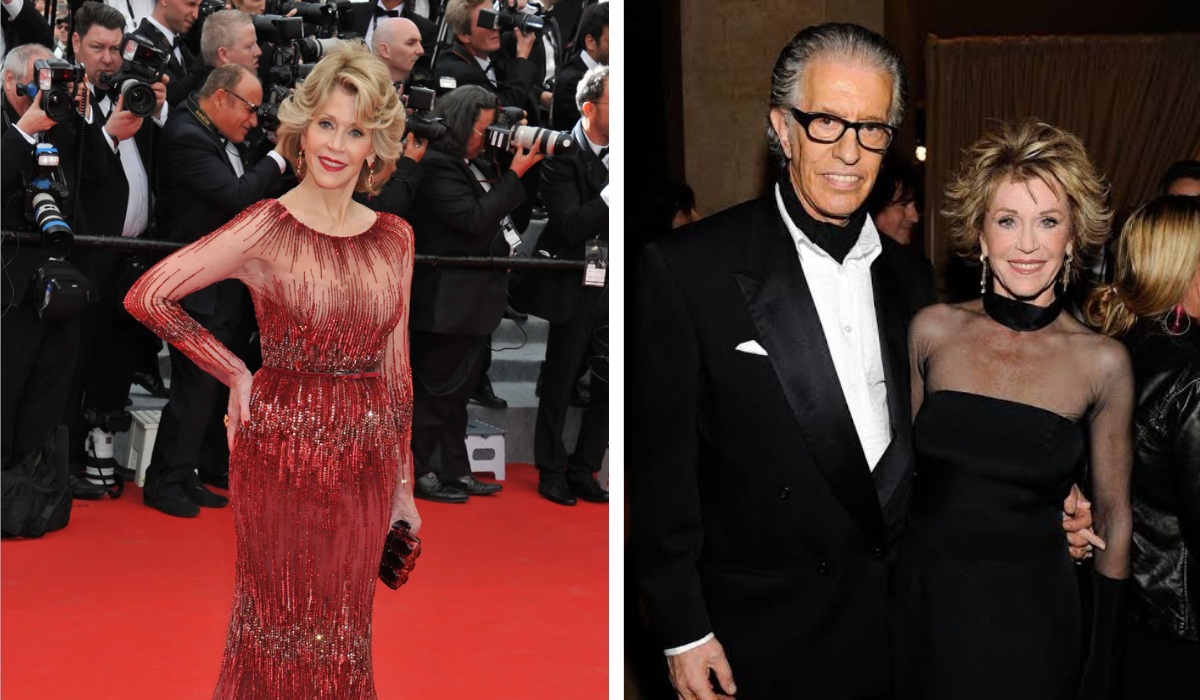
Jane Fonda is an iconic American actress, author, fitness pioneer, and activist whose career has crossed more than six decades. Born in New York City in 1937, she grew into one of Hollywood’s most recognizable performers while also becoming known for outspoken social and environmental advocacy. Her achievements include two Academy Awards, major television success, Broadway work, bestselling books, and a revolutionary fitness business. Her life story reflects remarkable professional reinvention, personal growth, and a continuing commitment to causes involving women, youth, peace, and the environment.
| Quick Bio | Details |
|---|---|
| Full Name | Jane Seymour Fonda |
| Birth Date | December 21, 1937 |
| Birthplace | New York City, United States |
| Profession | Actress, Author, Activist, Fitness Pioneer |
| Father | Henry Fonda |
| Education | Vassar College, Actors Studio |
| Academy Awards | 2 |
| Major Fitness Launch | 1982 |
| Known For | Film, television, activism, fitness |
| Notable Series | Grace and Frankie |
Early Life and Family Background
Jane Fonda was born into a distinguished American acting family. Her father, Henry Fonda, was one of Hollywood’s respected performers, while her mother was Frances Seymour Fonda. Growing up around fame gave her early exposure to the entertainment industry, but her childhood also included significant emotional challenges. She later wrote openly about those experiences and how they influenced her understanding of herself. Her upbringing ultimately became an important foundation for the resilience and independence that would characterize her public life.
Education and Acting Training
Jane Fonda attended Emma Willard School before studying at Vassar College. During her early adulthood, she became increasingly interested in acting and studied with renowned teacher Lee Strasberg. Her training at the Actors Studio helped develop the serious dramatic approach that eventually distinguished her from many performers of her generation. Rather than relying only on her family name, she worked to establish an independent artistic identity. Her dedication to formal acting training became an important part of her development as a respected stage and screen performer.
Broadway Beginnings
Jane Fonda began her professional acting journey on Broadway in the early 1960s. Her appearance in There Was a Little Girl earned her a Tony Award nomination and demonstrated that she could command attention beyond her famous family background. Theater provided an important training ground because live performance demanded discipline, emotional control, and confidence. Her early stage work helped prepare her for a long film career. These beginnings also showed that her ambitions extended beyond becoming simply another Hollywood celebrity.
Breakthrough in Hollywood
Jane Fonda gradually became a major film performer during the 1960s. Movies such as Period of Adjustment, Sunday in New York, Cat Ballou, Barefoot in the Park, and Barbarella helped establish her range and popularity. She moved comfortably between comedy, romance, drama, and more adventurous projects. Her performances attracted audiences while her distinctive screen presence made her increasingly influential. By the end of the decade, she had developed a reputation for choosing roles that could combine commercial appeal with personal ambition.
Major Dramatic Success
Jane Fonda reached a new level of critical recognition through serious dramatic roles. Her performance in Klute earned her the Academy Award for Best Actress in 1971. Several years later, she won another Oscar for Coming Home, a powerful film dealing with the experiences of veterans and the consequences of war. These victories confirmed her position as a highly accomplished dramatic performer. Her ability to combine emotional depth with strong character development helped make these films enduring parts of her professional legacy.
Klute and Her First Oscar
Jane Fonda’s role in Klute became one of the defining performances of her early career. She portrayed Bree Daniels, a complex character whose vulnerability and independence created a memorable dramatic portrait. The role demonstrated her ability to explore difficult emotions without losing the character’s strength. Winning the Academy Award transformed an already successful career into one recognized at the highest level of American cinema. The achievement also established a pattern of selecting sophisticated roles that challenged conventional expectations of leading actresses.
Coming Home and Her Second Oscar
Jane Fonda won her second Academy Award for Coming Home, released in 1978. The film explored love, disability, military service, and the personal consequences of the Vietnam War. Her performance received widespread acclaim because it balanced emotional sensitivity with determination. The movie also reflected themes that were increasingly important to her personally. Her involvement showed how her acting career and activism could overlap. The success of Coming Home strengthened her reputation as both an accomplished actress and a performer willing to engage with serious social subjects.
Producing and Socially Conscious Cinema
Jane Fonda also worked as a producer, using filmmaking to explore issues she considered important. Projects including The China Syndrome, 9 to 5, and Coming Home demonstrated her interest in stories involving environmental concerns, workplace equality, war, and social responsibility. This approach gave her greater creative influence than acting alone. Instead of simply accepting available roles, she became involved in projects that could communicate ideas and stimulate public discussion. Her producing work remains an important part of understanding her broader impact on entertainment.
Activism and the Vietnam War
Jane Fonda became internationally controversial for her activism during the Vietnam War. She opposed U.S. military involvement and worked with veterans and anti-war organizations. Her 1972 visit to North Vietnam produced intense criticism, particularly because of a widely circulated photograph taken in Hanoi. The controversy remained connected to her public identity for decades. She later acknowledged that the photograph caused harm and described the episode as a betrayal of the trust of American service members.
Civil Rights and Social Justice
Jane Fonda’s activism extended beyond Vietnam. She supported civil rights, racial justice, Native American causes, women’s rights, and other movements seeking social change. Her activism often involved using celebrity visibility to attract attention to issues that might otherwise receive less public discussion. This approach made her both admired and criticized, depending on political perspective. Regardless of differing opinions, her willingness to publicly associate herself with controversial causes demonstrated a level of personal commitment that became a defining feature of her public identity.
Fitness Revolution
Jane Fonda changed the fitness industry dramatically when she launched her famous workout program in 1982. Her exercise videos brought structured aerobic routines into homes and made fitness accessible to a huge audience. The program became a cultural phenomenon and transformed her from movie star into fitness entrepreneur. Her official biography states that her workout projects included numerous home exercise videos, audio recordings, and books, selling millions of copies. The original workout video became one of the most commercially successful home videos ever released.
Influence on Women’s Fitness
Jane Fonda’s fitness work had an influence far beyond exercise routines. Her videos encouraged women to view physical activity as part of everyday life and presented fitness as something that could happen at home. She also helped popularize the idea that exercise could remain relevant throughout adulthood. The business created a model for celebrity-led wellness brands long before social media became important. Many modern fitness personalities operate within a market that was partly shaped by the home-exercise revolution she helped popularize.
Books and Personal Writing
Jane Fonda has also built a successful career as an author. Her memoir My Life So Far explored childhood, acting, relationships, activism, and personal transformation. Published in 2005, the book quickly reached the top of The New York Times bestseller list. She later published Prime Time, focusing on aging, personal development, and living meaningfully in later life. Her writing demonstrates a willingness to examine both achievements and mistakes rather than presenting a simple celebrity success story.
Return to Acting
Jane Fonda returned to major screen work after a period away from filmmaking. Her comeback included Monster-in-Law, which became a commercial success, followed by appearances in films such as The Butler, This Is Where I Leave You, Youth, Our Souls at Night, Book Club, and 80 for Brady. Her later career demonstrated that age did not prevent her from remaining commercially relevant. Instead, she embraced roles that reflected different stages of adulthood and allowed her to connect with new generations of viewers.
Grace and Frankie Success
Jane Fonda found another major audience through the Netflix comedy series Grace and Frankie. Starring opposite Lily Tomlin, she played Grace Hanson, a sophisticated and complicated woman navigating major changes in later life. The series ran for seven seasons and became one of Netflix’s longest-running original programs. It allowed Fonda to combine comedy with stories about friendship, aging, relationships, family, sexuality, and independence. The role also reinforced her reputation as a performer capable of successfully adapting to changing television formats.
Broadway Return
Jane Fonda returned to Broadway in 2009 after a lengthy absence. She starred in 33 Variations, earning another Tony Award nomination for her performance. Returning to the stage at that point in her career illustrated her willingness to accept demanding creative challenges. Broadway requires a different type of concentration from film and television because performers must sustain a character before a live audience. Her return therefore represented more than nostalgia; it was another example of professional reinvention and artistic confidence.
Environmental Activism
Jane Fonda increasingly focused on environmental issues, particularly climate change. She became closely associated with Fire Drill Fridays, a recurring campaign designed to increase public awareness about the climate crisis. Her environmental work has included protests, public speeches, organizing, and political advocacy. Her approach combines celebrity visibility with direct participation, reflecting her belief that public figures should use their platforms responsibly. Her official website continues to highlight environmental activism alongside other causes involving women, youth, and social change.
Women’s Rights Advocacy
Jane Fonda has spent decades advocating for women and girls. She helped establish the Women’s Media Center and has supported organizations working against violence toward women. Her activism also includes efforts related to adolescent reproductive health and opportunities for young people. These activities demonstrate that her feminism is connected to practical programs as well as public statements. She has repeatedly argued that women’s representation, safety, health, and opportunities deserve sustained attention from institutions, communities, and policymakers.
Work With Young People
Jane Fonda founded the Georgia Campaign for Adolescent Pregnancy Prevention in 1995, an initiative focused on reducing adolescent pregnancy through education, youth development, family involvement, professional training, and advocacy. She also established the Jane Fonda Center for Adolescent Reproductive Health at Emory University. These projects show another side of her legacy: building institutions rather than only participating in public campaigns. Her work with young people demonstrates a long-term interest in prevention, education, opportunity, and healthier futures for adolescents.
United Nations Involvement
Jane Fonda was named a Goodwill Ambassador for the United Nations Population Fund in 1994. Her international involvement expanded her advocacy beyond American audiences and connected her public profile with global discussions surrounding women’s health and development. She later participated in projects focused on girls’ realities in developing communities. Her international work illustrates how her activism evolved from primarily national political issues toward broader questions involving health, gender equality, education, and human development.
Personal Life and Family
Jane Fonda’s personal life has included several high-profile marriages and important family relationships. She has three children, including actor Troy Garity, and her family has maintained connections to the entertainment industry. Her relationships have often attracted media attention, but her own writing has emphasized personal development and self-understanding. She has discussed the challenges of balancing family, professional ambition, relationships, and public expectations. These experiences contributed to the reflective tone found throughout her memoirs and later discussions about aging and fulfillment.
Awards and Honors
Jane Fonda has received some of the entertainment industry’s most prestigious honors. Her major achievements include two Academy Awards, an Emmy Award, British Academy Film Awards, Golden Globe recognition, an Honorary Palme d’Or, and the AFI Life Achievement Award. She has also received lifetime achievement honors from major entertainment organizations. These awards reflect the extraordinary length and variety of her career, spanning film, television, theater, fitness, writing, and cultural advocacy.
A Career of Reinvention
Jane Fonda’s career stands out because she repeatedly reinvented herself. She moved from Broadway to Hollywood, from dramatic cinema to producing, from acting to fitness entrepreneurship, from bestselling books to television comedy, and from celebrity activism to organized environmental campaigns. Each transition created a different chapter without completely abandoning the previous one. This ability to evolve has helped her remain culturally relevant across generations. Her story suggests that long careers can depend less on maintaining one identity and more on embracing meaningful change.
Lessons From Her Success
Jane Fonda’s journey offers several lessons about longevity and personal growth. Professional success can come from developing multiple skills rather than depending on one talent. Public influence can also be used to support causes that matter personally. Her life demonstrates that mistakes do not necessarily end a career when someone accepts responsibility, learns, and continues growing. Perhaps most importantly, her career shows that reinvention can happen at almost any age. Her later achievements prove that creativity and ambition do not have to disappear with time.
Cultural Legacy
Jane Fonda has left a cultural legacy that reaches far beyond individual movies. She influenced acting, home fitness, celebrity activism, women’s advocacy, environmental awareness, and conversations about aging. Her public image has changed considerably throughout her life, but each stage contributed something distinctive. She has been celebrated, criticized, studied, and discussed for decades. That continuing attention reflects the unusual breadth of her accomplishments. Few entertainers have managed to remain relevant across such different industries while maintaining an active role in public life.
Why Her Story Still Matters
Jane Fonda remains relevant because many of the issues she has addressed continue to shape public conversations. Climate change, women’s rights, aging, representation, health, and social justice remain important subjects around the world. Her career also provides an example of how entertainment and advocacy can overlap. Whether audiences agree with every position she has taken or not, her willingness to engage publicly with difficult issues makes her career historically significant. Her ability to continue working and speaking out has also challenged assumptions about aging in the entertainment industry.
Lasting Impact on Entertainment and Society
Jane Fonda’s overall impact comes from the combination of performance, entrepreneurship, writing, and activism. She achieved extraordinary success in entertainment while repeatedly using her public platform to support social causes. Her film awards established her artistic credibility, her workout programs transformed home fitness, and her activism created another dimension to her public identity. Her story is therefore not simply a biography of a Hollywood star; it is a study of reinvention, influence, controversy, resilience, and long-term public engagement.
Frequently Asked Questions
1. When was Jane Fonda born?
- Answer: She was born on December 21, 1937, in New York City.
2. How many Oscars has Jane Fonda won?
- Answer: She has won two Academy Awards for Best Actress, for Klute and Coming Home.
3. What made her fitness videos famous?
- Answer: Her 1982 workout program helped bring organized aerobic exercise into millions of homes and became a landmark fitness business.
4. What is she best known for besides acting?
- Answer: She is widely known for activism involving environmental issues, women’s rights, youth programs, and social justice.
5. What was her major television comeback?
- Answer: Grace and Frankie, starring her alongside Lily Tomlin, became one of her most successful later television projects.
Final Thoughts
Jane Fonda’s remarkable life combines Hollywood achievement with entrepreneurship, writing, fitness, and decades of activism. Her journey includes celebrated performances, major awards, controversial political moments, successful reinventions, and continuing advocacy for important causes. She remains an example of how a public figure can evolve across generations while maintaining a strong personal voice. Readers who want additional background can explore the related Wikipedia biography of Jane Fonda for further historical and career information.