
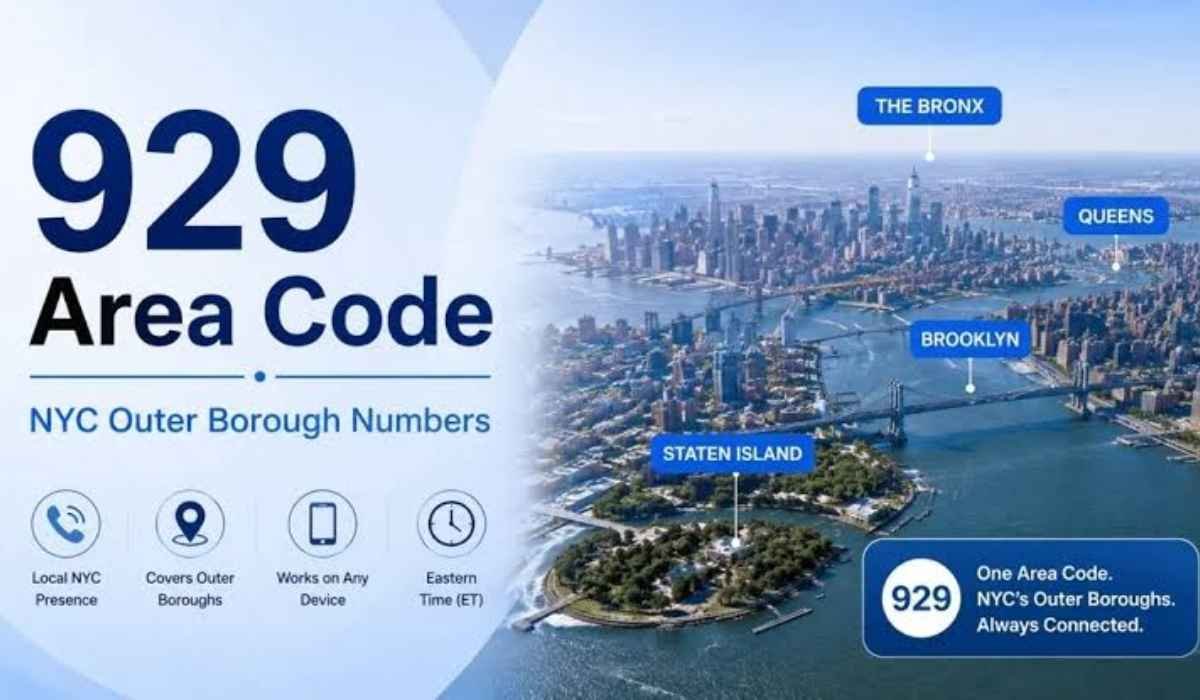
The 929 area code is associated with New York City, one of the most recognizable metropolitan areas in the United States. It serves several boroughs and helps meet the growing demand for telephone numbers among residents, businesses, and organizations. Whether you received a call from an unfamiliar number, want to identify a caller’s location, or are researching New York telephone numbers, understanding this area code can help you make informed decisions. This guide explains its location, history, time zone, coverage, uses, and important safety considerations.
Quick Bio Table
| Feature | Details |
|---|---|
| Area code | 929 |
| Country | United States |
| State | New York |
| Main location | New York City |
| Region | New York City boroughs outside Manhattan’s traditional 718/347 overlay area |
| Time zone | Eastern Time |
| Standard time | EST (UTC-5) |
| Daylight saving | EDT (UTC-4) |
| Introduced | 2011 |
| Numbering plan | North American Numbering Plan |
| Service type | Geographic telephone area code |
| Overlay codes | 718, 347, 929 |
| Main purpose | Expanding telephone number availability |
1. What Is the 929 Area Code?
The 929 area code is a telephone numbering code used in New York City, New York. It was introduced to provide additional phone numbers in a region where demand for telephone services continued to increase. It is part of the North American Numbering Plan, which organizes telephone numbers across the United States, Canada, and several other territories.
A number beginning with these three digits can be associated with New York City’s outer boroughs. However, the prefix alone cannot identify the caller’s exact neighborhood, identity, or current physical location.
2. Where Is the 929 Area Code Located?
This telephone code serves New York City’s boroughs of the Bronx, Brooklyn, Queens, and Staten Island. These areas have large populations, residential communities, commercial districts, and important cultural attractions.
The code operates as an overlay with other telephone codes serving the same geographic region. Consequently, two neighbors living on the same street may have different area codes even though they use the same local telephone network.
3. Is 929 a New York City Area Code?
Yes, it is a New York City telephone code. It is connected primarily with the four outer boroughs rather than being limited to one particular neighborhood or municipality.
New York City has multiple area codes because its population and telecommunications requirements have expanded over time. The introduction of additional numbering codes allows telephone companies to issue new numbers without requiring existing customers to change their established contact information.
4. Which New York Boroughs Use This Code?
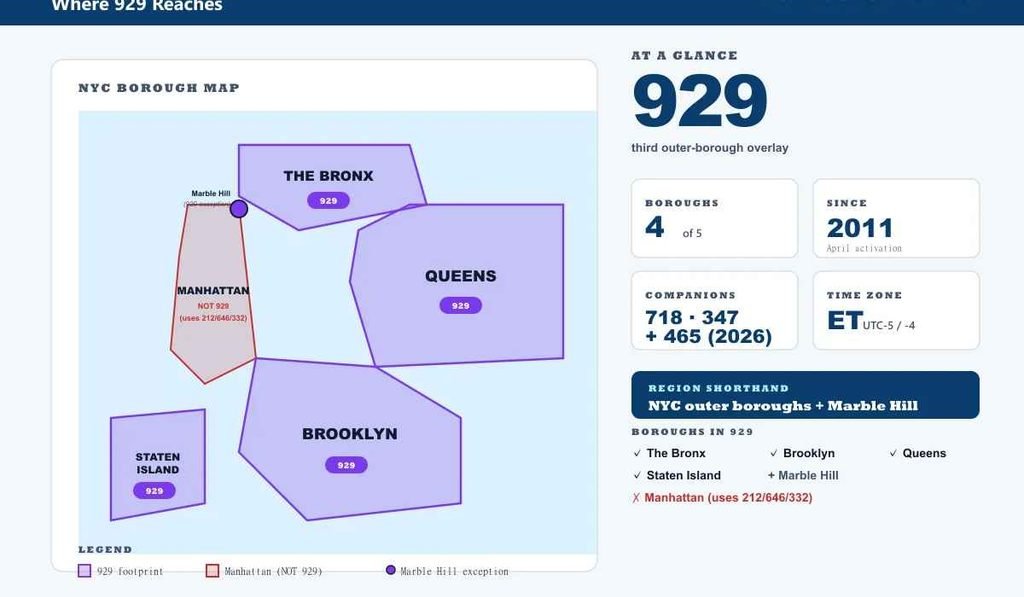
The four main boroughs served are:
- The Bronx: A borough known for its residential neighborhoods, parks, and cultural history.
- Brooklyn: A popular destination with diverse communities, businesses, and attractions.
- Queens: A large borough recognized for its international population and commercial centers.
- Staten Island: A residential borough with suburban communities and waterfront attractions.
The overlay region also includes Marble Hill in Manhattan. These locations share several telephone numbering codes. NY718-347-929_Overlay_Final-PL+1
5. When Was Area Code 929 Introduced?
The code officially entered service on April 16, 2011. It was introduced after telecommunications authorities identified increasing demand for telephone numbers in the outer boroughs of New York City.
The existing numbering resources were becoming limited, so regulators approved an overlay instead of dividing the region into smaller geographic sections. This approach allowed existing customers to keep their numbers while making additional numbers available to new customers. nationalnanpa.com+1
6. Why Was a New Area Code Needed?
New York City has a substantial population and a large telecommunications market. Residents, companies, government agencies, and service providers all require telephone numbers for everyday communication.
The growing popularity of mobile phones, internet-based calling, business communication systems, and additional telephone lines increased demand. Introducing another code provided telecommunications companies with additional numbering resources and helped prevent shortages that could affect customers.
7. Is 929 an Overlay Area Code?
Yes. An overlay means multiple telephone codes serve the same geographic region. Instead of assigning a completely separate code to a neighboring area, regulators introduce another code that operates alongside existing ones.
This arrangement allows new customers to receive numbers from different numbering groups without forcing established customers to replace their existing numbers. It also makes it possible for businesses and households in the same neighborhood to have different telephone prefixes.
8. Which Area Codes Share the Same Location?
Several other codes operate within the same outer-borough numbering region. They include 718, 347, 917, and the newer 465 code.
The 718 code was introduced earlier, while 347 and 917 expanded the available numbering resources. The 465 overlay entered service in June 2026, although its numbers are reserved for assignment after existing resources are exhausted. nanpa.com+1
9. What Time Zone Does 929 Use?
The region follows the Eastern Time Zone in the United States. This means its local time changes between standard time and daylight saving time during the year.
During standard time, the region follows Eastern Standard Time, which is UTC-5. During daylight saving time, it follows Eastern Daylight Time, which is UTC-4. Anyone calling from another country should consider this difference before making an international call.
10. What Is the Time Difference From Other Countries?
The time difference depends on the caller’s location and the time of year. For example, Pakistan generally 929 Area Code observes UTC+5, while New York observes either UTC-5 or UTC-4.
This usually makes New York nine or ten hours behind Pakistan. People contacting friends, relatives, customers, or professional contacts should check the current local time before calling to avoid disturbing someone during nighttime hours.
11. How Do You Dial a 929 Phone Number?
Calling a number in this region is straightforward, but the correct dialing format depends on where you are calling from.
For domestic calls, use the area code followed by the seven-digit subscriber number. In the local overlay region, ten-digit dialing is required, and callers may need to include the leading 1 according to their carrier’s dialing instructions.
For international calls, use the United States country code followed by the ten-digit number.
12. How to Call From Outside the United States
International callers can contact American telephone numbers by using the international dialing prefix required by their country, followed by the United States country code, 1.
For example, someone calling from Pakistan would generally dial:
00 1 929 XXX XXXX
The first two digits represent Pakistan’s international access prefix. The number 1 identifies the United States, and the remaining digits identify the American telephone number. Mobile carriers may also support the plus-sign format.
13. Is This a Mobile or Landline Code?
The prefix does not identify whether a particular number belongs to a mobile phone, landline, or internet-based telephone service. All these services can use numbers from the same geographic numbering region.
The type of connection depends on the telephone company and the individual number assignment. Additionally, customers can sometimes transfer their existing numbers between compatible service providers, making it difficult to determine the current carrier from the prefix alone.
14. Can Businesses Use This Telephone Prefix?
Yes. Businesses operating in New York City can use numbers from this numbering region for customer service, appointments, sales, and general communication.
A local telephone number can help a company establish a recognizable connection with its target market. Small businesses, independent professionals, retailers, and larger organizations may all use local telephone services. However, having a local-looking number does not automatically prove that a company has a physical office in New York.
15. Why Do People Receive Calls From These Numbers?
There are several legitimate reasons why someone might receive a call displaying this prefix. A person may be contacting them from New York, a business may be returning an inquiry, or an organization may be following up about an appointment.
Other possibilities include delivery notifications, customer support, financial services, and personal communication. Sometimes, automated systems also display local telephone numbers when contacting customers. Therefore, the number should be evaluated according to the caller’s message and behavior rather than its prefix alone.
16. Is 929 a Scam Number?
No. It is a legitimate geographic telephone code assigned to New York City. However, scammers can use telephone numbers displaying this prefix to make fraudulent calls appear local or familiar.
This practice is commonly associated with caller ID spoofing. A displayed number may not represent the caller’s actual location or identity. People should avoid sharing confidential information with unexpected callers, particularly when someone creates urgency or demands immediate payment.
17. What Is Caller ID Spoofing?
Caller ID spoofing occurs when a caller manipulates the telephone number displayed on the recipient’s device. Criminals may use this technique to imitate local businesses, financial institutions, government departments, or ordinary residents.
The purpose is often to increase the likelihood that someone will answer. Unfortunately, seeing a familiar geographic prefix does not guarantee that the call is trustworthy. Always verify unexpected requests through official contact information obtained independently.
18. How Can You Identify an Unknown Caller?
Identifying an unfamiliar caller requires more than examining the first three digits. You can begin by checking the complete telephone number through a reputable reverse-phone lookup service.
You should also examine whether the caller leaves a meaningful voicemail, identifies an organization, and provides verifiable contact details. If someone claims to represent a company, contact that organization through its official website or previously verified telephone number.
19. What Should You Do About Suspicious Calls?
If an unfamiliar caller behaves suspiciously, avoid sharing personal information or following instructions without verification. Hang up if the person pressures you into making a payment or revealing confidential details.
You can block unwanted numbers through your phone’s settings and report suspicious activity to your carrier. In the United States, consumers can also report unwanted calls and suspected fraud through the Federal Trade Commission’s official website.
20. Are Calls From New York Always Genuine?
No. A telephone prefix can provide a geographic numbering association, but it cannot authenticate the person making the call. Someone living outside New York may use an assigned local number, while another caller may manipulate the displayed caller ID.
Legitimate organizations also sometimes use third-party communication systems. Therefore, people should focus on verifying the caller’s identity, purpose, and requested action rather than assuming that every local-looking number is genuine.
21. Can You Get a New York Phone Number?
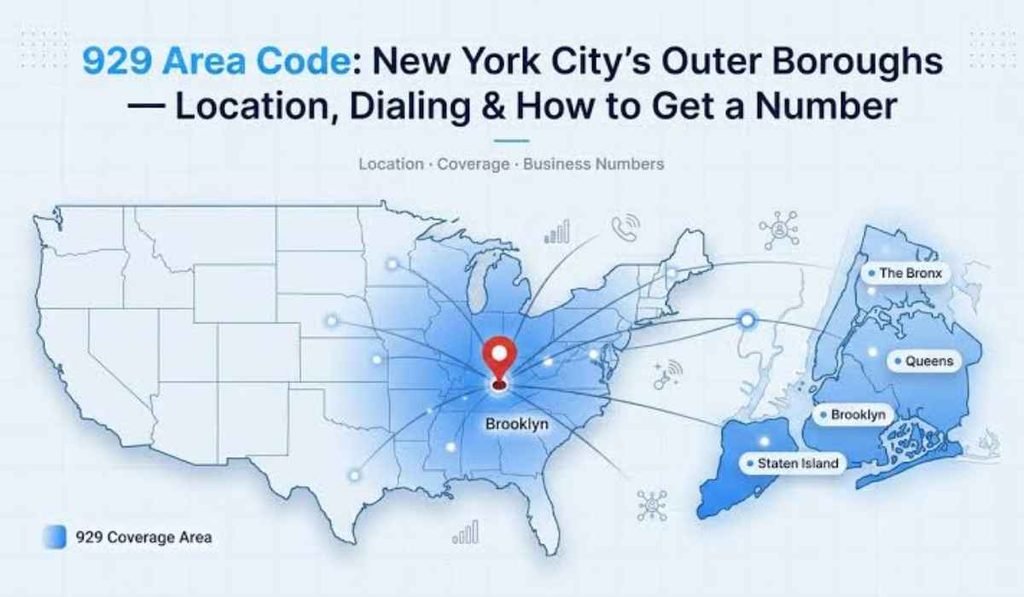
People who live, work, or operate businesses in New York may obtain local telephone numbers through telecommunications providers. Availability depends on the provider, the requested service, and the numbering resources currently available.
Customers can contact mobile carriers, landline providers, or supported internet telephone companies to explore their options. Some providers allow customers to select an available number, while others automatically assign one during account activation.
22. Can You Keep Your Existing Number?
Yes. Number portability allows eligible customers to transfer their existing telephone numbers when changing service providers. This makes it possible to maintain an established contact number while switching carriers.
The process generally requires the customer to provide account information and authorize the transfer. Customers should avoid cancelling their existing service before the transfer is completed because doing so may complicate the process.
23. Is 929 Useful for Small Businesses?
A local telephone number can be useful for companies that want to establish a presence in the New York market. Customers may feel more comfortable contacting a business that appears connected to their local community.
Restaurants, repair services, consultants, online stores, and professional offices can use local numbers for customer communication. Nevertheless, businesses should remember that a geographic prefix alone does not establish a company’s reputation or physical location.
24. What Makes New York’s Telephone System Unique?
New York City has one of the most developed and recognizable telephone numbering systems in the United States. Its high population density and extensive commercial activity have created substantial demand for telephone numbers.
Multiple overlays allow telecommunications providers to serve the same geographic territory using different prefixes. This system supports residential communication, business operations, emergency services, and modern mobile networks without requiring frequent changes to existing telephone numbers.
25. Does the Prefix Cover Manhattan?
The main geographic territory associated with this code is the Bronx, Brooklyn, Queens, and Staten Island, rather than Manhattan as a whole. However, the Marble Hill section of Manhattan is included in the outer-borough overlay region.
Most of Manhattan uses a different group of telephone codes, including 212, 332, and 646. The 917 code also serves the entire city. Understanding these distinctions helps people identify the general geographic association of an unfamiliar telephone number.
26. What Is the Difference Between 718 and 929?
Both codes serve the same general outer-borough geographic territory, but they were introduced at different times. The older 718 code became available in 1984, while the newer numbering code entered service in 2011.
The major difference is their introduction date and availability of assigned numbers, not the geographic region they represent. Residents can have either prefix while living in the same neighborhood, and both can be used for personal and business communication.
27. What Is the Difference Between 347 and 929?
The 347 and 929 codes are both overlays serving the outer boroughs of New York City. The 347 code was introduced in 1999, while the newer code followed in 2011.
Neither prefix identifies a particular neighborhood or type of telephone service. Both are part of the city’s expanded numbering system, which allows telecommunications companies to provide additional numbers to customers without changing the geographic boundaries of the existing service region.
28. What Is the Difference Between 917 and 929?
The 917 code has broader geographic coverage because it serves all five boroughs of New York City. The other code is associated with the outer-borough overlay region.
Both are legitimate New York telephone prefixes, and neither automatically identifies whether a call originates from a mobile phone or a landline. Their geographic associations are useful for understanding a number, but they should never be treated as proof of someone’s identity.
29. How Has Technology Increased Telephone Number Demand?
Modern technology has changed the way people communicate. Smartphones, tablets, internet-based calling systems, security devices, and business communication platforms have increased the need for telephone numbers.
A single individual or organization may use multiple numbers for different purposes. For example, a company might maintain separate lines for customer service, sales, employee communication, and automated notifications. These developments help explain why large metropolitan regions periodically need additional numbering resources.
30. Will New York Receive More Area Codes?
New York has already introduced several additional codes to accommodate its expanding telecommunications needs. In June 2026, the 465 code entered service as an overlay for the same outer-borough region.
However, its numbers are intended for assignment only after the existing numbering resources are exhausted. This demonstrates how authorities plan ahead to maintain the availability of telephone numbers as demand increases. nanpa.com+1
31. How Does an Area Code Affect Your Telephone Number?
An area code is the first three digits of a standard ten-digit North American telephone number. It helps telecommunications networks identify the numbering region associated with a call.
The remaining seven digits identify the specific telephone number within the numbering plan. Together, these digits allow networks to route calls between different carriers, customers, and geographic regions. Although the system is designed around geographic associations, modern number portability and internet calling have made physical location less predictable.
32. Can You Trust a Local-Looking Telephone Number?
A local-looking telephone number should not automatically be considered trustworthy. Fraudsters sometimes use familiar prefixes to make unexpected calls appear more believable.
If someone claims to represent a bank, government department, delivery company, or another organization, independently verify the request. Never provide passwords, security codes, or financial details simply because the displayed number looks familiar. Genuine organizations should be able to explain their requests through official communication channels.
33. Tips for Managing Unwanted Telephone Calls
Managing unwanted calls can improve privacy and make everyday communication easier. Most modern smartphones include tools that allow users to silence unknown callers, block specific numbers, and identify suspected spam.
People can also use carrier-provided call-filtering services to reduce unwanted interruptions. If a number repeatedly contacts you without a legitimate reason, consider reporting it. Keeping a record of suspicious calls can also help when submitting a complaint to the appropriate authorities.
34. Why Is This Code Important for New York Residents?
Telephone numbers remain an essential part of everyday life. Residents use them to communicate with relatives, schedule appointments, contact businesses, receive notifications, and access important services.
Additional numbering resources help the city’s communication infrastructure support population growth and technological changes. The availability of multiple prefixes also means that people can continue using their established numbers while new customers receive different combinations.
35. What Should You Know Before Calling Back?
Before returning an unfamiliar call, consider whether you were expecting communication from someone in New York. Check the voicemail, search for the organization independently, and examine whether the caller provided a legitimate reason for contacting you.
Be particularly careful with missed calls that immediately encourage you to call back, pay a fee, or provide personal information. If the call appears suspicious, there is usually no need to respond. You can block the number and report it through appropriate channels.
36. Future of Telephone Communication in New York
Telephone communication will continue evolving as mobile networks, internet-based services, and connected devices become increasingly common. Businesses are adopting digital communication systems, while consumers rely on smartphones for personal and professional activities.
These developments may create additional demand for numbering resources. Telecommunications regulators will continue monitoring available numbers and considering new overlays when necessary. The goal is to maintain reliable communication while minimizing disruption for existing customers.
Frequently Asked Questions
1. Where is the 929 telephone prefix located?
– It serves the Bronx, Brooklyn, Queens, and Staten Island in New York City, including the Marble Hill section of Manhattan.
2. When was this telephone code introduced?
– It officially entered service on April 16, 2011, to provide additional telephone numbers for New York City.
3. What time zone does it follow?
– It follows Eastern Time, including EST during standard time and EDT during daylight saving time.
4. Is a call from this prefix always legitimate?
– No. It is a legitimate New York code, but scammers can spoof telephone numbers to make fraudulent calls appear local.
5. Which other telephone codes serve the same region?
– The 718, 347, 917, and 465 codes also serve the outer-borough numbering region.
Final Thoughts
Understanding New York’s telephone numbering system makes it easier to recognize unfamiliar calls, understand geographic prefixes, and communicate with people and businesses across the city. The 929 prefix represents an important part of the region’s telecommunications infrastructure. Whether you are researching its history, checking an unknown caller, or learning about American telephone systems, knowing its geographic coverage and dialing requirements can be helpful. For additional information, visit the Wikipedia page about New York area codes and explore the history of telephone numbering across the state.