


1. Introduction to RLP Letter
Receiving an unfamiliar legal or business-related document can create confusion, especially when it includes payment requests, allegations, or warnings about possible legal action. Understanding an RLP letter is important for anyone who has received correspondence connected with a retail business in the United Kingdom. Such communication is commonly associated with Retail Loss Prevention Limited, an organization that handles civil recovery claims for retailers. However, the abbreviation can have different meanings in other industries, so identifying the sender and understanding the document’s purpose should always be the first step.
Quick Information Table
| Category | Details |
|---|---|
| Common term | RLP Letter |
| Full name | Retail Loss Prevention |
| Associated organization | Retail Loss Prevention Limited |
| Country | United Kingdom |
| Main purpose | Civil recovery correspondence |
| Common situation | Alleged retail loss or shoplifting |
| Document type | Private civil demand |
| Criminal conviction | Not automatically created |
| Court judgment | No |
| Main recipients | Individuals receiving retail-related claims |
| Important information | Allegations, payment requests, and response details |
| Relevant guidance | Citizens Advice and legal professionals |
2. What Does RLP Stand For?
RLP Letter commonly stands for Retail Loss Prevention when used in the context of British retail businesses. It relates to services that help retailers pursue compensation for financial losses they believe resulted from certain incidents. Retail Loss Prevention Limited communicates with individuals on behalf of businesses that use its services. Nevertheless, the abbreviation is not exclusive to this organization. Different industries may use the same letters for unrelated purposes, making it important to check the complete organization name before drawing conclusions.
3. What Is an RLP Letter?
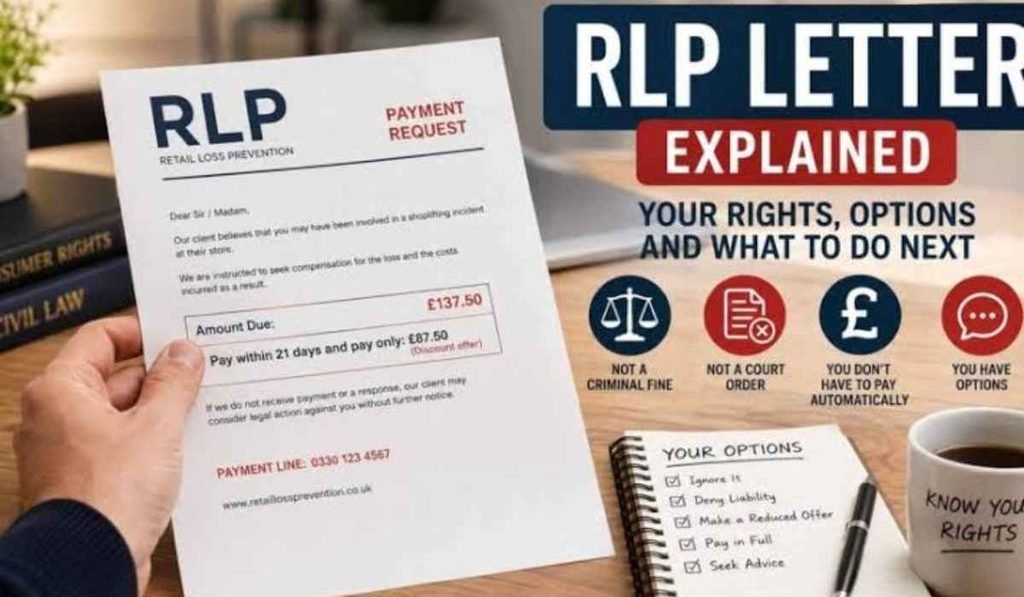
An RLP letter is generally a written demand connected with a retailer’s civil recovery claim. It may be sent after a business alleges that an individual caused financial loss through an incident involving merchandise, theft, or another retail-related matter. The correspondence normally explains the allegation and identifies the amount being requested. It may also describe available response options. Importantly, receiving such correspondence does not automatically establish liability, create a criminal conviction, or mean that a court has ordered payment.
4. Why Do Retailers Send These Letters?
Retailers may use civil recovery services when they believe an incident has caused financial damage to their business. Rather than handling every communication internally, some companies work with specialist organizations to manage claims and contact individuals. The purpose is to communicate the retailer’s position and request compensation where it believes compensation is appropriate. The reasons behind each claim can differ, so recipients should examine the specific incident, supporting information, and explanation provided rather than assuming every situation follows an identical process.
5. Common Reasons for Receiving the Document
There are several situations in which someone might receive this type of correspondence. One common example involves an allegation of shoplifting or taking merchandise without completing payment. Other situations may involve suspected retail fraud, employee-related incidents, or damage to business property. The document should explain the particular circumstances being investigated or claimed. Recipients should carefully distinguish between an allegation and an established fact because the presence of an accusation in formal correspondence does not independently prove that the accusation is correct.
6. Understanding the Information Included
The contents of the correspondence provide important details about the claim. It may identify the retailer, incident date, location, alleged circumstances, requested compensation, and a reference number. Some documents also explain how the recipient can communicate with the organization or respond to the demand. Reading every section is essential because important instructions may appear outside the opening paragraph. Keeping a complete copy can also help recipients understand the history of communication if further correspondence arrives.
7. Is It a Criminal Fine?
One of the most important distinctions is that a private civil recovery demand is not automatically a criminal fine. Criminal fines generally arise through the criminal justice system, whereas civil recovery concerns a claim for financial compensation. The two processes are legally different and may operate independently. Therefore, recipients should not assume that receiving a payment request means they have been convicted of an offence. Equally, they should not assume that a separate criminal investigation is impossible simply because the correspondence concerns a civil claim.
8. Is It the Same as a Court Judgment?
No, a private demand and a court judgment are different documents with different legal significance. A demand communicates that an organization or business believes money is owed. A judgment represents a court’s decision following the appropriate legal process. Receiving an initial demand does not mean that a judge has already examined the evidence or decided the matter. However, formal court proceedings may become relevant if a claimant decides to pursue the dispute through the civil courts.
9. Who Is Retail Loss Prevention Limited?
Retail Loss Prevention Limited is a UK organization associated with civil recovery services for retailers and other businesses. Its role involves managing correspondence and claims connected with alleged losses suffered by commercial clients. Businesses may use specialist services to communicate their position and seek compensation. Anyone receiving correspondence bearing this organization’s name should verify the details using reliable contact information. It is also sensible to understand which retailer is involved and what specific circumstances have led to the communication.
10. How Much Money Can Be Requested?
The amount requested can vary depending on the circumstances and the explanation RLP Letter provided by the claimant. A demand may refer to merchandise value, alleged financial losses, or additional expenses that the retailer believes resulted from an incident. However, the amount printed in a document should not automatically be treated as an amount legally established by a court. Anyone concerned about the calculation should examine the breakdown and ask for clarification about the basis of the claim. Independent legal guidance may help where significant sums are involved.
11. What Should You Do After Receiving One?
The first step is to remain calm and read the complete document. Identify the sender, retailer, reference number, alleged incident, requested amount, and any response deadline. Avoid making immediate decisions based solely on threatening or formal language. Preserve the envelope, original correspondence, emails, and any related evidence. If the allegations are unclear, consider requesting an explanation. Taking an organized approach makes it easier to understand the situation and decide whether professional advice or a written response is appropriate.
12. How to Check Whether the Letter Is Genuine
Verifying the sender is an important part of handling unexpected correspondence. Check the organization’s complete legal name, postal address, official website, contact details, and reference information. Do not automatically trust a telephone number or payment link simply because it appears in a document. Where possible, independently locate the organization’s official contact information and confirm that the communication is genuine. Be particularly careful if the message contains unusual payment instructions, suspicious links, or requests for unnecessary personal information.
13. Can You Dispute the Allegations?
Recipients may have reasons to disagree with the information contained in a demand. For example, the incident might have been incorrectly described, the wrong individual might have been identified, or the circumstances may be incomplete. In such cases, it is important to examine the available evidence and communicate any disagreement clearly. Avoid making unsupported accusations or providing inaccurate statements. If the matter could have legal consequences, obtaining independent advice before sending a detailed response can help protect your position.
14. How to Prepare a Written Response
A written response should be professional, clear, and focused on the actual issue. Begin by identifying the reference number and explaining why you are contacting the organization. If you dispute the claim, describe the specific points that require clarification. You may also request relevant supporting information where appropriate. Keep a copy of everything sent and use a communication method that provides a reliable record. Avoid including unnecessary personal details or statements that you do not fully understand.
15. What Happens If You Ignore the Correspondence?
Ignoring a demand does not automatically create a criminal conviction or a court judgment. However, silence does not guarantee that the matter will disappear. The organization or retailer may send additional communications, request payment again, or consider further legal steps. The actual consequences depend on the circumstances and the claimant’s decisions. It is therefore unwise to assume that ignoring every letter is a safe strategy. Understanding the claim and obtaining appropriate advice is generally a more informed approach.
16. Can an RLP Letter Affect Your Criminal Record?
A private civil recovery demand does not, by itself, create a criminal record. Criminal records relate to criminal justice outcomes rather than simply receiving a payment request from a private organization. Nevertheless, an alleged retail incident could potentially involve a separate police investigation or criminal proceedings, depending on the facts. Recipients should understand which process they are dealing with and avoid confusing civil correspondence with criminal documentation. If police involvement or prosecution is mentioned, independent legal advice is particularly important.
17. Does It Affect Your Credit Score?
Receiving a private demand does not automatically mean that a County Court Judgment has been registered against someone or that their credit score will immediately decrease. These are separate matters. Credit consequences may arise in different circumstances, particularly where a court judgment is obtained and the applicable reporting rules are met. Anyone worried about their financial record should establish whether actual court proceedings have taken place. They should also avoid confusing an organization’s payment request with an officially recorded judgment.
18. Understanding the Difference Between Civil and Criminal Law
Civil law generally deals with disputes involving individuals, organizations, financial responsibilities, and compensation. Criminal law concerns offences prosecuted through the criminal justice system. Although one incident may sometimes create both civil and criminal issues, the procedures and outcomes are different. A retailer seeking compensation is not performing the same role as a police force or criminal court. Understanding this distinction helps recipients interpret formal correspondence more accurately and recognize when a particular issue requires specialist legal guidance.
19. What Evidence Should You Keep?
Keeping accurate records can be extremely useful when responding to a disputed claim. Relevant materials may include the original letter, its envelope, emails, receipts, bank statements, shopping records, and other documents connected with the incident. If there are witnesses or relevant communications, make a factual note while the information remains clear. Avoid changing original documents or deleting potentially relevant messages. A well-organized record makes it easier to explain your position to an adviser and respond accurately if additional questions arise.
20. Why Is the Response Deadline Important?
Formal correspondence may include a date by which the recipient is asked to respond or make a decision. This date should be identified and recorded immediately. Missing a requested deadline may result in further communication or additional steps by the claimant. However, a deadline printed in a private demand should not automatically be confused with a court-imposed deadline. Actual court documents can involve specific procedural requirements. If the document appears to be from a court, seek appropriate advice promptly and follow the stated instructions.
21. Can You Negotiate the Amount?
In some circumstances, a recipient and claimant may discuss the amount being requested or explore a possible resolution. Whether negotiation is suitable depends on the facts, the strength of the claim, and the recipient’s circumstances. Before agreeing to anything, understand what the payment would cover and whether it would settle the entire civil claim. Request written confirmation of any proposed agreement. If liability is disputed or the amount is substantial, independent advice can help someone understand the possible implications of accepting an offer.
22. What If You Receive More Than One Letter?
Receiving repeated correspondence can be stressful, but each document should be reviewed carefully. Check whether the reference number, retailer, alleged incident, and amount are consistent with earlier communication. Keep all documents together in chronological order and note when each one arrived. If the newer correspondence contains different information, request clarification through verified contact details. Do not assume that repeated demands represent separate claims or additional court orders without examining their actual contents.
23. What If the Allegation Is Incorrect?
An incorrect allegation should be addressed through a clear and factual explanation. Start by identifying the specific information you believe is inaccurate, such as the incident date, location, identity, or description of events. Include relevant supporting material where appropriate and retain copies of your response. Avoid guessing about details or making statements that cannot be supported. Where the allegation is serious or could lead to legal proceedings, consider consulting a qualified solicitor who can assess the available information.
24. How Can Vulnerable Individuals Get Help?
Some people may find formal payment demands especially difficult to understand because of age, disability, financial hardship, language barriers, or other personal circumstances. They may benefit from assistance from a trusted person, an independent adviser, or an appropriate support organization. Clear communication is important, and recipients can explain if they require additional assistance to understand the correspondence. Organizations should also be contacted through verified channels when accessibility or communication support is needed. Professional guidance can be valuable when someone feels unable to manage the situation independently.
25. The Role of Citizens Advice
Citizens Advice is a useful independent resource for people seeking general information about consumer issues, debt-related concerns, and civil disputes in England and Wales. Its guidance can help explain the difference between a business demand and a legal decision. It can also help individuals understand what information may be relevant before contacting a professional adviser. Because legal rules and procedures can differ between jurisdictions, people should make sure the guidance they use applies to their location and circumstances.
26. How to Avoid Common Mistakes
People dealing with unexpected legal correspondence sometimes make decisions before understanding the document. Common mistakes include ignoring every communication, paying without checking the claim, overlooking deadlines, deleting relevant records, and assuming a private demand is a court judgment. Another mistake is relying entirely on anonymous online discussions. Each situation can involve different facts and legal considerations. Reading carefully, verifying the sender, preserving evidence, and obtaining suitable advice can help prevent avoidable problems.
27. Important Differences Between Related Documents
Understanding the type of document received can prevent unnecessary confusion. A private demand letter communicates a claim, while a court claim form indicates that formal proceedings have been started. A County Court Judgment represents a court decision, and enforcement documents may relate to a later stage of the process. These documents should never be treated as interchangeable. Recipients should identify the issuing organization, read the title, and follow the appropriate instructions for the document they actually received.
28. Is Every RLP Claim Automatically Valid?
No claim should be treated as automatically established simply because it arrives on professional letterhead. A claimant must have an appropriate legal basis for seeking compensation. If a dispute reaches court, the applicable legal requirements and available evidence become important. The recipient may have relevant arguments or information that need consideration. This does not mean every demand is invalid; it means that the details and circumstances matter. A qualified legal adviser can assess the particular claim more accurately than general online information.
29. Can the Matter Go to Court?
A retailer may consider civil court proceedings if it believes a claim remains unresolved. However, the possibility of court action does not mean proceedings have already started. A recipient should distinguish a warning about potential legal action from an actual court claim form. If formal proceedings are issued, the recipient must pay attention to the applicable response procedure and deadline. Failing to respond appropriately to genuine court documents can have serious consequences, so professional guidance may be necessary.
30. Online Research and Reliable Information
The internet contains many discussions about retail recovery demands, but not every website provides accurate or current legal information. Some articles may describe individual experiences, while others explain general procedures. Readers should prioritize official organizational information, government resources, established consumer advice services, and qualified legal professionals. Forum discussions can provide background but should not replace professional guidance. It is also important to check the publication date because legal procedures and organizational practices can change over time.
31. How to Protect Your Personal Information
Personal information should be handled carefully whenever responding to unexpected correspondence. Avoid sending identification documents, banking details, passwords, or sensitive records unless there is a clear and legitimate reason. Verify the recipient before sharing information electronically. If a request appears excessive or unrelated to resolving the issue, ask why the information is necessary and how it will be protected. Keeping communication professional and limiting unnecessary disclosures can reduce privacy risks while allowing the matter to be addressed.
32. Important Questions to Ask Before Responding
Before taking action, recipients should understand the nature of the claim and the information supporting it. Useful questions include which retailer is making the claim, what incident is being described, how the requested amount was calculated, and what evidence supports the allegation. It may also be necessary to establish whether the communication is a private demand or formal court paperwork. Getting clear answers to these questions can help someone make a more informed decision about the appropriate next step.
33. Why Understanding the Legal Context Matters
Legal procedures are not identical across the United Kingdom. England and Wales, Scotland, and Northern Ireland have different court systems and procedural rules. This means advice written for one part of the country may not apply to someone living elsewhere. The nature of the claim and the documents received also influence the relevant legal position. Anyone facing a significant dispute should seek guidance that matches their jurisdiction instead of relying on general statements found in unrelated online articles.
34. Final Thoughts on Understanding Retail Recovery Correspondence
Understanding unfamiliar business correspondence requires patience, accurate information, and careful attention to detail. The most important thing is to identify the sender and establish whether the document concerns a civil claim, criminal matter, or formal court proceeding. Avoid making assumptions about liability or consequences before reviewing the evidence and relevant legal requirements. Keeping records, checking deadlines, and seeking independent guidance can help recipients approach the situation responsibly and protect their interests throughout the process.
35. What Should You Do If You Cannot Afford the Requested Payment?
Financial difficulties can make an unexpected compensation demand particularly stressful. Before agreeing to a payment arrangement, understand the basis of the claim and whether the amount is disputed. If you are considering an agreement, ask about available arrangements and obtain written confirmation of the terms. Do not promise payments that you cannot realistically afford. An independent debt adviser or solicitor may help you understand your options and explain whether the proposed arrangement is appropriate for your circumstances.
36. Can Someone Else Help You Handle the Matter?
Yes. A trusted family member, friend, consumer adviser, or solicitor may help you understand complicated correspondence. Having another person review the document can make it easier to identify important information, deadlines, and questions that need answering. However, you should remain involved in decisions about your personal information and any proposed agreement. If you authorize someone to communicate on your behalf, check whether the organization requires written permission before discussing the case with that person.
37. How to Recognize Genuine Court Documents
Genuine court documents are different from ordinary business correspondence. They normally identify the court, provide information about the claim, and explain the relevant response procedure. A private organization mentioning possible court action does not mean that a case has already been filed. Check the document carefully and independently verify anything that appears uncertain. If you receive an actual court claim, do not treat it like an ordinary reminder letter. Obtain suitable legal advice and pay attention to the official response deadline.
38. Why Accurate Information Is Important
Accurate information helps individuals understand their rights and responsibilities when dealing with financial or legal disputes. Online articles may explain general principles, but they cannot establish whether a particular person owes money or whether a specific demand is legally recoverable. Every case should be considered according to its own facts, supporting documents, and relevant jurisdiction. Checking reliable resources and obtaining independent guidance where necessary can prevent misunderstandings and help people make informed decisions.
39. The Future of Retail Loss Prevention Services
Retailers continue to use different methods to manage merchandise losses, protect business property, and improve security. These methods may include surveillance systems, staff training, inventory management, security procedures, and civil recovery services. As technology develops, businesses may introduce more sophisticated approaches to identifying and investigating incidents. However, organizations must still consider applicable laws, privacy requirements, and fair treatment when handling allegations. Clear communication and transparent procedures remain important for maintaining consumer confidence.
40. Frequently Asked Questions About RLP Letters
1. What does RLP stand for?
– RLP commonly stands for Retail Loss Prevention in the UK retail industry. It is associated with civil recovery services used by retailers seeking compensation for alleged business losses.
2. Is an RLP letter a criminal conviction?
– No. Receiving a private civil recovery demand does not automatically create a criminal conviction. Criminal proceedings are separate and depend on the circumstances.
3. Do I have to pay an RLP demand?
– Not automatically. Whether the requested amount is legally recoverable depends on the facts, evidence, and applicable law. Consider obtaining independent legal advice before deciding.
4. What happens if I ignore an RLP letter?
– You may receive additional demands or warnings about possible court proceedings. The retailer may also consider pursuing a civil claim, so ignoring the correspondence does not guarantee that the matter will end.
5. Can I challenge an RLP payment demand?
– Yes. You can dispute incorrect allegations, question the amount requested, and seek supporting information. Independent legal advice can help you understand the best approach.
Conclusion
Understanding an RLP letter is important for anyone dealing with unexpected correspondence from a retail recovery organization. The document generally concerns a civil compensation claim rather than an automatic criminal penalty or court judgment. Recipients should carefully examine the allegations, verify the sender, review the requested amount, preserve relevant evidence, and pay attention to deadlines. Every situation is different, so independent legal guidance can help clarify individual rights and responsibilities. For additional background about retail theft and related topics, readers can explore Wikipedia’s Shoplifting article alongside reliable resources such as Citizens Advice.