

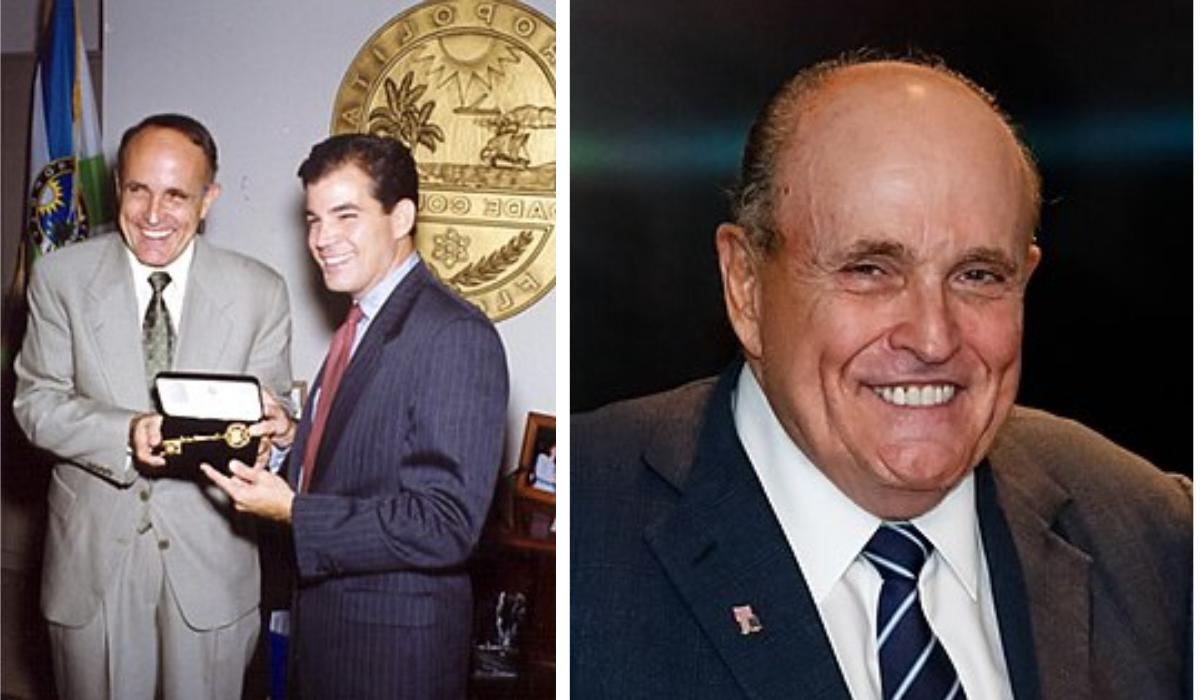
Rudy Giuliani is one of the most recognizable and controversial figures in modern American public life. Born in Brooklyn, New York, on May 28, 1944, he developed a career spanning federal prosecution, municipal leadership, private law, national politics, and political advocacy. He became New York City’s 107th mayor in 1994 and served two terms through 2001. His administration became associated with falling crime, quality-of-life initiatives, and a forceful governing style. His public image changed dramatically after the September 11 attacks, when his leadership during the city’s emergency response brought him international recognition.
| Quick Bio | Details |
|---|---|
| Full Name | Rudolph William Louis Giuliani |
| Born | May 28, 1944 |
| Birthplace | Brooklyn, New York, USA |
| Profession | Lawyer, prosecutor, politician |
| Education | Manhattan College; New York University School of Law |
| Mayor of New York City | 1994–2001 |
| Political Party | Republican |
| Known For | Federal prosecution, New York mayoralty, 9/11 leadership |
| Presidential Campaign | 2008 Republican nomination |
| Children | Andrew and Caroline |
| Major Recognition | Time Person of the Year, 2001 |
Early Life and Brooklyn Background
Rudy Giuliani grew up in Brooklyn in a working-class family with Italian immigrant roots. Rudy Giuliani upbringing exposed him to New York’s neighborhoods, institutions, and strong traditions of public service. He attended Bishop Loughlin Memorial High School before studying at Manhattan College. Rudy Giuliani education eventually led him to New York University School of Law, where he earned his law degree. These academic experiences established the foundation for a career that would move from courtroom work to federal law enforcement and eventually the highest municipal office in New York City.
Education and Legal Foundation

After graduating from Manhattan College in 1965, Giuliani attended New York University School of Law and graduated in 1968. He began his legal career as a clerk for U.S. District Judge Lloyd MacMahon. Soon afterward, he joined the U.S. Attorney’s Office for the Southern District of New York. His early work included narcotics and organized-crime investigations, giving him valuable experience with complex criminal cases. His prosecutorial reputation developed quickly, helping establish the aggressive law-enforcement identity that would later define much of his public career.
Federal Prosecutor Career
Giuliani’s federal career became an important chapter in his rise to national prominence. He served in senior Justice Department positions during the Reagan administration, including Associate Attorney General from 1981 to 1983. He was responsible for supervising major federal law-enforcement operations and later became U.S. Attorney for the Southern District of New York in 1983. In that role, he pursued organized crime, narcotics trafficking, corruption, and white-collar crime. His prosecution record helped create a reputation for determined enforcement and contributed significantly to his later political success.
Fight Against Organized Crime of Rudy Giuliani
As U.S. Attorney, Giuliani became particularly associated with high-profile prosecutions against organized-crime figures. Rudy Giuliani office also targeted financial crimes and public corruption. The Southern District of New York was already one of the country’s most important federal prosecutorial offices, and his aggressive approach attracted considerable media attention. Supporters viewed his strategy as evidence of courage and effectiveness, while critics sometimes questioned his confrontational style. Nevertheless, the period established him as a nationally recognized prosecutor and provided the professional foundation for his future political career.
First Mayoral Campaign
In 1989, Giuliani entered New York City’s mayoral race and challenged Democratic incumbent Ed Koch in the Republican primary before ultimately running against David Dinkins. He lost the general election by a very narrow margin. Rather than ending his political ambitions, the defeat gave him time to refine his campaign message. Four years later, he returned to the race with a strong focus on crime, public order, economic development, and quality of life. In 1993, he defeated Dinkins and began a historic two-term mayoralty.
Becoming New York City Mayor of Rudy Giuliani
Giuliani took office as New York City’s 107th mayor on January 1, 1994. Rudy Giuliani administration quickly emphasized public safety, policing, welfare reform, economic development, and neighborhood conditions. He promoted a highly visible management style and expected city agencies to meet measurable goals. His administration also embraced CompStat, a data-driven approach to policing that became influential beyond New York. His supporters argued that these policies helped transform the city, while critics maintained that some approaches created serious social and civil-rights concerns.
Crime Reduction Policies
Crime reduction became one of the defining themes of the mayoral years. Official and historical accounts point to substantial declines in violent crime during the 1990s and early 2000s. Giuliani strongly promoted aggressive policing and quality-of-life enforcement. Rudy Giuliani administration believed that addressing relatively minor offenses could help prevent more serious crimes and improve public confidence. The approach became closely associated with the “broken windows” philosophy. Although crime was already declining for several reasons, his administration became strongly identified with the city’s changing public-safety environment.
CompStat and Police Management
CompStat became one of the most influential administrative innovations associated with the Giuliani era. The system used crime statistics and regular accountability meetings to identify problem areas and evaluate police commanders. The method emphasized measurable results and rapid responses to emerging crime patterns. It was later studied and adopted in other jurisdictions. Supporters saw CompStat as an example of data-driven government, while critics argued that pressure to improve statistics could encourage problematic policing practices. The debate surrounding the system remains part of the broader discussion about policing and municipal accountability.
Welfare Reform and Economic Policies of Rudy Giuliani
The Giuliani administration also pursued welfare reform and policies intended to strengthen New York’s economy. Welfare offices were transformed toward employment-focused services, while the administration promoted business development and reductions in certain taxes. Supporters argued that these policies contributed to economic growth and lower welfare dependence. Critics questioned how much credit should be assigned to City Hall because broader national economic trends also affected employment and city finances. Nevertheless, welfare reform became an important part of the administration’s governing philosophy and political identity.
Controversies During the Mayoral Years
The mayoral record was not universally praised. Giuliani frequently faced criticism for his confrontational relationship with political opponents, journalists, activists, and community groups. His administration also faced controversies involving policing, racial tensions, civil liberties, and public demonstrations. Critics argued that his tough approach disproportionately affected minority communities. Supporters responded that restoring order and reducing crime required firm enforcement. These competing interpretations remain central to assessments of his time in office, demonstrating why his mayoralty continues to generate both admiration and criticism.
September 11, 2001 Leadership
The September 11 attacks became the defining moment of Rudy Giuliani’s public career. As mayor, he was present in New York during the attacks and participated in the immediate emergency response. The city faced an unprecedented crisis involving thousands of casualties, destroyed infrastructure, and major disruption. Giuliani appeared publicly to reassure residents and communicate information during the unfolding disaster. Rudy Giuliani visible presence helped create an image of decisive leadership at a moment of national trauma. New York City’s official archival material describes his role in coordinating rescue, recovery, and efforts to maintain order.
National Recognition After 9/11
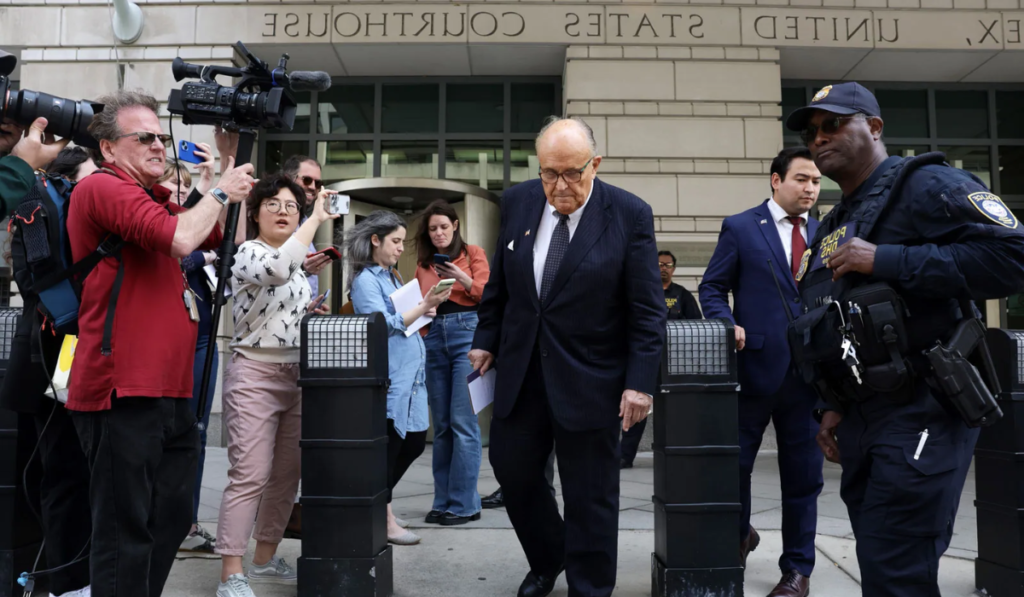
Following the attacks, Giuliani became an internationally recognized symbol of New York’s resilience. Time magazine selected him as its Person of the Year for 2001. His public appearances, speeches, and interactions with emergency workers strengthened his reputation beyond New York. The phrase “America’s Mayor” became closely associated with his post-9/11 public image. Rudy Giuliani leadership during the crisis eventually became one of the strongest elements of his political brand, even as later controversies significantly changed how the public viewed his career.
End of the Mayoral Era
Giuliani left City Hall after completing his second term at the beginning of 2002. Rudy Giuliani administration had transformed many aspects of city government, but debates over his methods continued. He departed with a national reputation that appeared strong enough to support a larger political future. His post-mayoral career, however, would take several different directions. He entered the private sector, built consulting interests, and remained active in Republican politics. The years after City Hall eventually brought him back into national political discussions.
Business and Consulting Career
After leaving office, Giuliani entered the private sector and developed consulting and security-related business interests. Giuliani Partners became associated with security, crisis management, and advisory services. His experience in law enforcement and municipal government gave him a distinctive profile in these fields. He also became connected with major law firms and corporate clients. His post-mayoral business career demonstrated how political experience could be converted into private-sector opportunities, although his later political activities increasingly became the dominant focus of public attention.
2008 Presidential Campaign
Giuliani sought the Republican presidential nomination in 2008. His campaign emphasized national security, terrorism prevention, leadership, and his record as New York mayor. However, his campaign strategy of largely avoiding early-voting states did not produce the momentum he expected. His socially moderate positions also created difficulties within parts of the Republican primary electorate. He eventually ended his campaign after disappointing results and endorsed John McCain. The experience marked an important attempt to transform his post-9/11 reputation into a national electoral movement.
Relationship With Donald Trump
Giuliani later became closely associated with Donald Trump. He supported Trump during the 2016 presidential campaign and eventually became one of Trump’s most visible legal and political allies. Rudy Giuliani public role expanded as he appeared on television, spoke to reporters, and participated in political and legal efforts connected with the administration and the 2020 election. This period represented a major transformation in his public identity, moving him from former mayor and prosecutor toward an increasingly partisan national political figure.
2020 Election Controversies
After the 2020 presidential election, Giuliani promoted claims alleging widespread election fraud and argued that Trump had been unfairly denied victory. Courts and election officials rejected numerous claims made in litigation. Rudy Giuliani post-election activities ultimately became central to professional disciplinary proceedings. A New York appellate court suspended his law license in 2021 after finding evidence of demonstrably false and misleading statements related to the election. The episode became one of the most consequential developments in his legal career.
Disbarment and Legal Ethics
Giuliani’s legal career suffered major professional consequences because of his post-election conduct. New York disbarred him in July 2024, while the District of Columbia disbarred him in September 2024. The disciplinary proceedings focused heavily on false or misleading statements connected with efforts to challenge the 2020 election. Disbarment meant that he could no longer practice law in those jurisdictions. The outcome represented a dramatic reversal for a former federal prosecutor whose professional reputation had once been built largely on courtroom credibility and legal enforcement.
Defamation Litigation
Another major legal challenge involved Georgia election workers Ruby Freeman and Wandrea ArShaye Moss. Giuliani made false claims about the two women following the 2020 election. In December 2023, a federal jury awarded them approximately $148 million in damages. Giuliani later reached a settlement with the women in January 2025 concerning the dispute over his Florida property and other matters. The case became a significant example of the legal consequences associated with false statements about election workers.
Dominion Voting Systems Settlement
Giuliani also faced a major defamation lawsuit from Dominion Voting Systems concerning statements he made about the company following the 2020 election. In September 2025, the parties settled the $1.3 billion lawsuit, with settlement details kept confidential. The litigation was another major consequence of his election-related public statements. Together, the Dominion case and the Georgia election-worker litigation illustrate how political speech can lead to substantial civil litigation when statements are alleged and determined to be defamatory.
Criminal Cases and Political Consequences
The legal consequences of the 2020 election period also extended to criminal proceedings. Giuliani was among the defendants charged in Georgia in connection with efforts to challenge the 2020 election result. However, in November 2025, the Georgia election-interference case was dismissed after the replacement prosecutor, Pete Skandalakis, concluded that continuing the prosecution was not in the public interest. This development means that older descriptions of the case as an active prosecution can be misleading when discussing his status in 2026.
Family and Personal Life
Giuliani has been married several times and has two children, Andrew and Caroline. Rudy Giuliani personal life has received substantial media attention because of his political prominence and multiple marriages. Biography sources identify Regina Peruggi, Donna Hanover, and Judith Giuliani among his spouses. Despite the public attention surrounding his career, he has generally maintained a distinction between his family relationships and his professional activities. His children have also attracted public interest because of their connections to his political career and New York life.
Books and Public Speaking
Giuliani has also contributed to political and leadership literature. His book Leadership examined management, crisis response, decision-making, and lessons from his public career. Public speaking became another important part of his post-mayoral profile. His experiences as prosecutor and mayor provided material for discussions about leadership, security, policing, and crisis management. His reputation, however, has evolved considerably, meaning that modern assessments of his work often place his earlier achievements alongside the controversies surrounding his later political activities.
Leadership Style and Public Image
His leadership style has often been described as direct, demanding, and highly personal. Supporters appreciated his willingness to confront problems and demand measurable performance from government agencies. Critics saw the same characteristics as evidence of excessive centralization and an unwillingness to compromise. This contrast helps explain why assessments of his career differ so sharply. His public image has moved through several stages: federal prosecutor, tough mayor, post-9/11 national symbol, presidential candidate, Trump attorney, and controversial election figure.
Rudy Giuliani’s Enduring Legacy
The legacy of Rudy Giuliani remains complicated. Rudy Giuliani supporters emphasize the reduction in crime during his mayoral years, administrative reforms, economic policies, and leadership after September 11. Critics emphasize policing controversies, confrontational politics, and the legal and ethical consequences of his post-2020 election activities. A balanced historical assessment must consider both sides. Rudy Giuliani career demonstrates how a public figure can experience extraordinary success and recognition while later facing severe professional and legal setbacks. That contrast makes his biography particularly significant in discussions of American politics and leadership.
Final Assessment
Rudy Giuliani’s life and career span several important chapters of American history. From Brooklyn and federal prosecution to New York City Hall, the September 11 attacks, presidential politics, and the turbulent aftermath of the 2020 election, his public journey has remained highly visible. Rudy Giuliani career includes major achievements as well as serious controversies and professional sanctions. As a result, his story is best understood not through a single label but through the different stages of his public life. Readers seeking additional background can explore the related for a broader chronological overview.
Frequently Asked Questions
1. Who is Rudy Giuliani? – • He is a former New York City mayor, federal prosecutor, lawyer, and political figure known for his leadership after September 11 and later political controversies.
2. When was Rudy Giuliani mayor of New York City? – • He served as mayor from 1994 through 2001, completing two terms.
3. Why did Rudy Giuliani become famous? – • His federal prosecution career, New York mayoralty, crime-reduction policies, and leadership following the September 11 attacks made him nationally prominent.
4. Was Rudy Giuliani disbarred? – • Yes. He was disbarred in New York in July 2024 and in Washington, D.C., in September 2024 following disciplinary proceedings related largely to his 2020 election conduct.
5. What is Rudy Giuliani known for today? – • He remains known for his former mayoral career, post-9/11 leadership, relationship with Donald Trump, 2020 election activities, defamation litigation, and professional disciplinary history.